Monitoring Country

Cane Toads

Cane Toads are an invasive species that have been spreading across Australia since they were released in the 1930s. Cane Toads are poisonous to the native species that eat them.
Cane Toads are a threat to native species
Cane Toads eat a variety of insects and snails, compete with native frogs for food and habitat, and produce a toxin that is poisonous to many of Australia’s animals including mammals, reptiles and birds.
Cane Toads are a serious threat in particular to native predators like quolls, goannas and freshwater crocodiles. Many native animals cannot tolerate the toxin found in the Cane Toads and therefore eating them usually leads to death.
The biological effects caused by Cane Toads has been identified as one of the key threatening processes to native species under the Environmental Protection and Biodiversity Conservation Act. There is a National Threat Abatement Plan on the biological effects by Cane Toads.
Managing Cane Toads
Total eradication of Cane Toads is not currently possible because of how widespread they are across Australia and how quickly they are continuing to move. Best practice management of Cane Toads requires collaborations between government, researchers and land managers. Control methods for Cane Toads include:
- Toad musters - capture and humane killing of Cane Toads
- Conditioned taste aversion – teaching native predators like quolls and crocodiles to avoid eating Cane Toads Where they live
Important! Cane Toads can be easily confused with some native frogs – make sure you have correctly identified it as a Cane Toad before humanely killing.
Species Records
Use the + - Zoom controls to select an area

Cane Toads were introduced to far-north Queensland in 1935 to control a native beetle pest. Since then, they have expanded their territory into most areas of Queensland, Northern Territory and the Kimberly in Western Australia, and into parts of New South Wales. They are continuing to expand their territory and are expected to eventually be found across most of the northern half of Australia.
It is important to report any sightings of Cane Toads that are more than 50 km ahead of the front line (where they are currently found).
Habitat
Cane Toads are found in a wide range of habitats but prefer open grasslands and wetter habitats because they need access to moisture to breed and survive.
What they look like
Cane Toads are larger and stockier than native frogs. They have dry, warty skin a distinctive ‘M’ shaped ridge above the eyes.

What they sound like
Cane Toads make a long steady trill that sounds like a dial tone or outboard motor in the distance
Listen to their call below (source The Australian Museum)
REMEMBER! Any time you do work that might disturb or interfere with native animals and vegetation, particularly threatened species, you need to check with the state authorities to see if you need any approvals, such as scientific licences or animal ethics committee permits.
You can monitor Cane Toads to better understand:
-
Where they do and don’t live
-
How many live on Country
-
How well management of Country and the Cane Toads is working
By using one or more the following methods, you can better understand Cane Toads on your Country. If you monitor the same place at the same time every year, you can see if there are changes to Cane Toads on Country.
Spotlight & Listen Surveys
A good way to check for Cane Toads on Country is with a Spotlight & Listen Survey. This involves looking for Cane Toads at night and listening for their calls.
What can you learn?
- Presence/absence – if and where Cane Toads species live on Country
- Occupancy - If enough surveys are done at different places on Country, the presence/absence data can be used to estimate occupancy. This type of modelling helps to work how many places really have Cane Toads, even if they weren’t seen or hear at each site. This can be used as an indicator of how large the population might be and if is getting smaller/bigger over time.
- Activity – how many Cane Toads are seen/heard during a survey. This can be used as an indicator of how large a population might be and if is getting smaller/bigger over time.
Using it the Right-way
Plan to do a targeted survey for Cane Toads:
- In or nearby freshwater habitats - Cane Toads will use almost all freshwater habitats including temporary waterbodies, although they will most likely be found near permanent waterbodies in dry periods or locations.
- When Cane Toads are most active and calling - after dark on warm, wet nights in warmer months. Male Cane Toads may respond to call playback during breeding season
Make sure you can correctly identify Cane Toads – they can look like some species of native frogs, particularly if they are young Cane Roads.
Consider before you start your survey if you are going to catch and euthanise any Cane Toads that you find.
You can learn more about Spotlight & Listen Surveys on the How we check on things page and in the Standard Operating Procedure for Spotlight & Listen Surveys for Frogs
eDNA Water Sampling
Environmental DNA (eDNA) water monitoring involves taking water samples from a waterbody and getting the sample analysed to see if Cane Toads are or have recently been in a waterbody.
What can you learn?
- Presence/absence – if and where Cane Toads live on Country
Using it the Right-way
Collect samples when Cane Toads are more likely to have been in or using a water body. If there is lots of water around, they may be using other sites.
You can learn more about the eDNA monitoring on the How we check on things page and in the Standard Operating Procedure for eDNA Water Sampling (EnviroDNA Kit) or no Kit
Any time you do work that might disturb or interfere with native animals and vegetation, particularly threatened species, you need to check with the state authorities to see if you need any approvals, such as scientific licences or animal ethics committee permits.
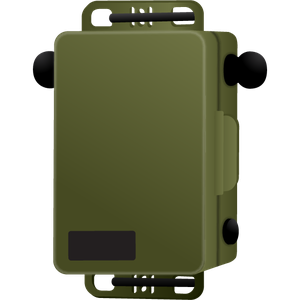
ARUs are a useful tool for monitoring animals that make calls or songs, such as frogs and birds. They are a sound recording device that can be set to record the sounds of Country over time and save them to a memory card.
Before using ARUs to monitor animal …
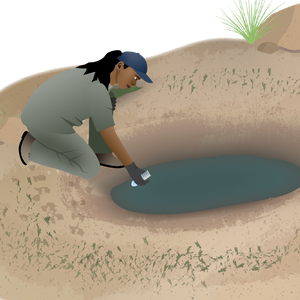
Animals leave genetic (DNA) traces of where they have been shedding their fur, skin, urine, faeces, sperm and eggs into the environment. This DNA can be found for a short time afterward using environmental DNA (eDNA) monitoring. This involves taking a water, soil or air sample and seeing if there …
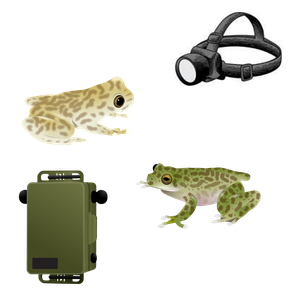
Spotlight and listen surveys are a useful tool for monitoring frogs. The survey involves looking for frogs that are active and listening for frogs that are calling. It can also involve call playback, which means playing pre-recorded frog calls and then listening to see if any frogs in the environment …
Primary sources
This landing page was developed using the following sources:
Primary sources
This landing page was developed using the following sources:
- PestSmart (2024). Cane toads. https://pestsmart.org.au/toolkits/cane-toads/
- Department of Climate Change, Energy, the Environment and Water (2024). Cane Toads (Bufo marinus). https://www.dcceew.gov.au/environment/invasive-species/feral-animals-australia/cane-toads
- Shine, R. (2010). The ecological impact of invasive cane toads (Bufo marinus) in Australia. The Quarterly Review of Biology 85(3):253-291. https://www.jstor.org/stable/10.1086/655116
- Kearney, M., Phillips, B.L., Tracy, C.R., Christian, K.A., Betts, G., Porter, W.P. (2008). Modelling species distributions without using species distributions: the cane toad in Australia under current and future climates. Ecography 31(4):423-434. https://nsojournals.onlinelibrary.wiley.com/doi/10.1111/j.0906-7590.2008.05457.x
- WA Department of Biodiversity, Conservation and Attractions (2024). Cane toad management. https://www.dbca.wa.gov.au/management/threat-management/invasive-animals/cane-toad-management
- Australian Museum (2021). Cane Toad. https://australian.museum/learn/animals/frogs/cane-toad/
- FrogID (2024). Rhinella marina. https://www.frogid.net.au/frogs/rhinella-marina
- Ward-Fear, G., Bruny, M., the Bunuba Rangers, Forward, C., Cooksey. I., Shine, R. (2024). Taste aversion training can educate free-ranging crocodiles against toxic invaders. Proceedings of the Royal Society B: Biological Sciences 291(2028): 20232507. https://royalsocietypublishing.org/doi/10.1098/rspb.2023.2507
Tools and resources
- Record frog calls and get help identifying calls using the Australian Museum’s FrogID app - https://www.frogid.net.au/
- Record sightings and control activities of Cane Toads using the ToadScan app - https://www.feralscan.org.au/toadscan/