Monitoring Country

Frogs

Frogs are amphibians, meaning they are animals with wet skin that need water and land to live. Some frogs are also called toads – they generally have bumpy skin and spend more of their life on land.
There are 240 different frog species that are native to Australia. Frogs are a good ecological indicator of ecosystem health because they are sensitive to environmental change. For example, when frogs disappear from the area, it can be a warning that the wetlands and waterways are under threat from pollution or habitat loss.
Conservation status
Many frog populations worldwide and in Australia are declining. In Australia, 47 species are listed nationally as Threatened. Another 4 species are listed as Extinct, but it is possible that more species are already Extinct or likely to become extinct by 2040. Most of the species listed as Threatened are only found in small areas.
Where Frogs live
Species Records
Use the + - Zoom controls to select an area
Frogs are found across Australia. The highest diversity of frogs are found in north-east Queensland and south-west WA.
Habitat
Frogs can live in both terrestrial and aquatic environments, but they need water to breed and survive. They usually start their life as tadpoles in water and then transform into frogs that live on land but usually near water. Australia’s frog species have adapted to live in many different habitat types, and many can survive long periods without water with behaviours like burrowing.
What they eat
Frogs eat invertebrates like worms and insects.
Threats
Some of the key threats to the Frogs include:
- Climate change
- Disease like Chytrid fungus
- Unhealthy Country or lost habitat caused by:
- wrong-way fire
- land clearing
- Predation by introduced animals like Mosquito Fish and Feral Pigs
- Water pollution
REMEMBER! Any time you do work that might disturb or interfere with native animals and vegetation, particularly threatened species, you need to check with the state authorities to see if you need any approvals, such as licences or animal ethics committee permits. Click here for links to your state’s websites.
You can monitor Frogs to better understand:
- What and how many frog species live on Country
- Where frogs do and don’t live
- Check how well management of Country and threats to frogs is working
By using one or more the following methods, you can better understand frogs on your Country. If you monitor the same place at the same time every year, you can see if there are changes to frogs on Country.
Spotlight & Listen Surveys
The best way to check for frogs on Country is with a Spotlight & Listen Survey. This involves looking for frogs at night and listening for their calls.
What can you learn?
- Biodiversity – what species of frog live on Country
- Species richness - how many different species of frog live on Country
- Presence/absence – if and where frog species live on Country
- Occupancy - If enough surveys are done at different places on Country, the presence/absence data can be used to estimate occupancy. This type of modelling helps to work how many places really have frog species, even if they weren’t seen at every spotlighting point or transect. This can be used as an indicator of how large the population might be and if is getting smaller/bigger over time.
- Activity – how many frogs are seen/heard during a survey. This can be used as an indicator of how large a population might be and if is getting smaller/bigger over time.
Using it the Right-way
Use reference materials like frog ID books, FrogID app and databases like ALA to find out what frog species might be on Country, what habitats they prefer, if they respond to call playback, what they look and sound like, and when their peak activity and calling periods are (breeding season).
If you are interested in frog biodiversity (all of the frogs living on Country), plan to do this survey:
- When most species are active and calling – check when each species’ has its breeding season. Peak calling periods are usually on warm, wet nights and in still or light wind conditions
- Several times throughout the year – this means you will detect frogs that are active/breeding in different seasons
- In several different habitat types
- In or nearby different water body types including artificial or natural, flowing or stationary, ephemeral or permanent.
If you are interested in a specific type of frog, plan to do a targeted survey:
- When the target species is active and calling – check when it has its breeding season, and what rainfall, temperature, humidity and wind it prefers
- In the target species preferred habitat – check where the frog lives during its breeding season
You can learn more about Spotlight & Listen Surveys on the “How we check on things” page and in the Standard Operating Procedure Spotlight & Listen Surveys for Frogs
Audio Recording Units
Audio Recording Units (ARU) can be used to monitor frogs because these are a device that can record the sounds of frogs calling and save the sounds to a memory card.
What can you learn?
- Biodiversity – what species of frog live on Country
- Species richness - how many different species of frog live on Country
- Presence/absence – if and where frog species live on Country
- Occupancy - If enough ARUs are deployed at different places on Country for long enough, the presence/absence data can be used to estimate occupancy. This type of modelling helps to work how many places really have frog species, even if they weren’t heard on every ARU. This can be used as an indicator of how large the population might be and if is getting smaller/bigger over time.
Using it the Right-way
ARUs can be set to record only when the frogs will be calling (e.g. after sunset).
If you are interested in frog biodiversity (all of the frogs living on Country), plan to do this survey:
- When most species are active and calling – check when each species’ has its breeding season. Peak calling periods are usually on warm, wet nights and in still or light wind conditions
- Several times throughout the year – this means you will detect frogs that are active/breeding in different seasons
- In several different habitat type
- In or nearby different water body types including artificial or natural, flowing or stationary, ephemeral or permanent.
If you are interested in a specific type of frog, plan to do a targeted survey:
- When the target species is active and calling – check when it has its breeding season, and what rainfall, temperature, humidity and wind it prefers
- In the target species preferred habitat – check where the frog lives during its breeding season
You can learn more about ARUs on the “How we check on things” page and in the Standard Operating Procedure Biodiversity Monitoring with Audio Recording Units
eDNA Water Sampling
Environmental DNA (eDNA) water monitoring involves taking water samples from a waterbody and getting the sample analysed to see if what frog species are or have recently been in a waterbody.
What can you learn?
- Biodiversity – what species of frog live on Country
- Species richness - how many different species of frog live on Country
- Presence/absence – if and where frog species live on Country
Using it the Right-way
Use reference materials like frog ID books and databases like ALA to find out what frog species might be on Country, what habitats they prefer and when they are likely to be active.
Collect samples when frogs are more likely to have been in or using a water body. This can depend on what species of frog you are interested in.
You can learn more about the eDNA monitoring on the “How we check on things” page and in the Standard Operating Procedure eDNA Water Sampling with EnviroDNA Kit or no Kit
Any time you do work that might disturb or interfere with native animals and vegetation, particularly threatened species, you need to check with the state authorities to see if you need any approvals, such as scientific licences or animal ethics committee permits.
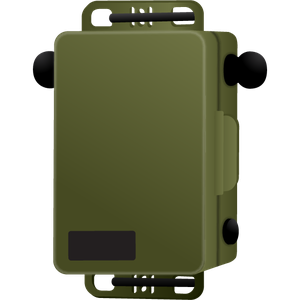
ARUs are a useful tool for monitoring animals that make calls or songs, such as frogs and birds. They are a sound recording device that can be set to record the sounds of Country over time and save them to a memory card.
Before using ARUs to monitor animal …
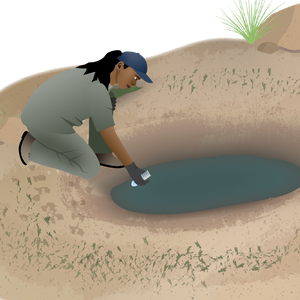
Animals leave genetic (DNA) traces of where they have been shedding their fur, skin, urine, faeces, sperm and eggs into the environment. This DNA can be found for a short time afterward using environmental DNA (eDNA) monitoring. This involves taking a water, soil or air sample and seeing if there …
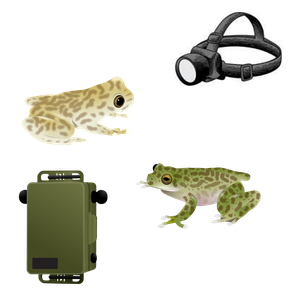
Spotlight and listen surveys are a useful tool for monitoring frogs. The survey involves looking for frogs that are active and listening for frogs that are calling. It can also involve call playback, which means playing pre-recorded frog calls and then listening to see if any frogs in the environment …
Primary sources
This landing page was developing using the following sources:
More information
Primary sources
This landing page was developed using the following sources:
- Australian Museum (2020). Australia’s native frogs. https://australian.museum/learn/animals/frogs/
- Department of the Environment and Heritage (2004). Frogs of Australia – Fact Sheet. Commonwealth of Australia. https://www.dcceew.gov.au/environment/biodiversity/threatened/publications/factsheet-frogs-australia
- Geyle H. M., Hoskin C. J., Bower D. S., Catullo R., Clulow S., Driessen M., Daniels K., Garnett S. T., Gilbert D., Heard G. W., Hero J-M., Hines H. B., Hoffmann E. P., Hollis G., Hunter D. A., Lemckert F., Mahony M., Marantelli G., McDonald K. R., Mitchell N. J., Newell D., Roberts J. D., Scheele B. C., Scroggie M., Vanderduys E., Wassens S., West M., Woinarski J. C. Z., Gillespie G. R. (2022) Red hot frogs: identifying the Australian frogs most at risk of extinction. Pacific Conservation Biology 28, 211-223. https://www.publish.csiro.au/PC/PC21019
- Geyle, H., Gillespie G., & Hoskin, C. (2021). The Australian frogs most at risk of extinction and the actions needed to save them. Threatened Species Recovery Hub NESP. https://www.nespthreatenedspecies.edu.au/publications-and-tools/the-australian-frogs-most-at-risk-of-extinction-and-the-actions-needed-to-save-them
Tools and resources
- Frog ID app: https://www.frogid.net.au/