Monitoring Country

Introduced Predators

Introduced predators are invasive animals that live in the bush across Australia. They survive by scavenging and hunting other animals. Introduced predators include:
- Feral Cats
- Foxes
- Wild Dogs
Many of these introduced predators have established large populations across Australia.
Introduced predators are a threat to biodiversity and healthy Country
Introduced predators are carnivorous (eat animals). They like to scavenge on carrion and eat live prey, including native mammals, birds, reptiles, frogs, fish and insects. They will also eat other invasive animals like house mice and rabbits.
Introduced predators are a serious threat to Australia’s wildlife because they can kill and eat a large number of animals every night. They have contributed to the extinction and decline of many native mammal, birds, reptile and frog species.
Introduced predators also compete for food resources with native predators like Quolls, Eagles and Goannas, and have disease that can infect native animals, livestock and humans.
The impacts of introduced predators may be listed as a key threatening processes to native species under the Environmental Protection and Biodiversity Conservation Act.
Managing Introduced Predators
Introduced predators in Australia are widespread and well-adapted to the environment, which makes eradication difficult. Best practice management of introduced predators therefore focuses on reducing the threat of predation to native animals. Control methods for introduced predators include shooting, trapping, poison baiting and introduced predator-proof fenced-areas.
Reducing the impact of introduced predators Is most effective when the control program is also combined with the control of other invasive animals like Rabbits, right-way fire management, and replanting or protection of native vegetation.
You can monitor introduced predators to:
-
Better understand where they are and aren’t on Country
-
See how many and what species of introduced predators live on Country
-
Check how well management of Country and introduced predators is working
Recommended monitoring methods
By using one or more of the following methods, you can better understand introduced predators on your Country. If you monitor the same place at the same time every year, you can see if there are changes to introduced predators on Country.
2 Ha Plot: Tracks, Scats, Diggings & Signs Survey
This is a method where trackers search a 2 Ha area for all signs of animals, including tracks, scats, diggings and other signs. If signs of a species are found in a plot, its presence is recorded. This method doesn’t focus only on introduced predators, as the presence of all native and invasive species is recorded.
Remote Camera Survey
This is a method where cameras are placed out on Country and left to record any animals that move past the camera. The camera can be lured (usually with food like peanut butter, sardines or chicken) to encourage an animal to visit the camera. If a species is detected on camera, its presence is recorded. This method doesn’t focus only on introdcued predators, as the presence of all native and invasive species is usually recorded.
Any time you do work that might disturb or interfere with native animals and vegetation, particularly threatened species, you need to check with the state authorities to see if you need any approvals, such as scientific licences or animal ethics committee permits.
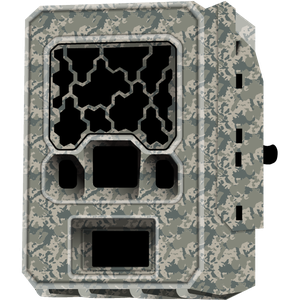
This is a method where cameras are placed out on Country and left to record any animals that move past the camera. The camera can be lured (usually with food like peanut butter, sardines or chicken) to encourage an animal to visit the camera. If a species is detected on camera, its presence is recorded. This method doesn’t focus only on feral predators, as the presence of all native and invasive species is usually recorded.
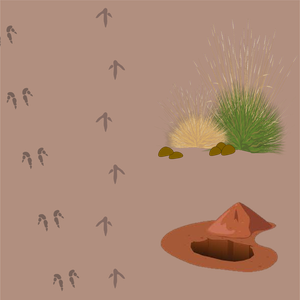
This is a method where trackers search a 2 Ha area for all signs of animals, including tracks, scats, diggings and other signs. If signs of a species are found in a plot, its presence is recorded. This method doesn’t focus only on feral predators, as the presence of all native and invasive species is recorded.
Primary sources
This landing page was developed using the following sources:
Primary sources
This landing page was developed using the following resources:
-
Department of Climate Change, Energy, the Environment and Water (2024). Feral Cats. https://www.dcceew.gov.au/environment/invasive-species/feral-animals-australia/feral-cats
-
Dorph, A., Ballard, G., Legge, S., Algar, D., Basnett, G., Buckmaster, T., Dunlop, J., Edwards, A.M., Hine, A., Knight, A.R., Marshall, E., McColl-Gausden, S.C., Pauza, M.D., Penman, T.D. (2024). Current and emerging feral cat management practices in Australia. Wildlife Research 51(2024: WR23107. DOI: 10.1071/WR23107
-
Department of Sustainability, Environment, Water, Populations and Communities (2011). European red fox (Vulpes vulpes). Commonwealth of Australia: Canberra, ACT. https://www.dcceew.gov.au/environment/invasive-species/publications/factsheet-european-red-fox-vulpes-vulpes
Tools and resources
-
Codes for the humane capture, handling and destruction of feral animals in Australia: https://www.dcceew.gov.au/environment/invasive-species/publications/model-codes-practice-feral-animals