Monitoring Country

Rabbit

Other common names: European wild rabbit
Aboriginal language names: Bina Guraarr in Gamilaraay/Gamilaroi/Kamilaroi, Yurabirr in Yuwaalayaay/Yuwaalaraay
Rabbits are one of the most common and widespread invasive species that live in the bush across Australia. They are herbivorous (eat plants) and survive by eating a wide variety of plants including crops and native vegetation.
Rabbits are a threat to biodiversity
Rabbits harm Country and native plants because they ring-bark, dig up roots, graze and browse on native vegetation and build warrens, leading to:
- Poor seedling regeneration
- Decline or loss of native plant species
- Soil erosion
- Spread of weeds
- Change of habitat structure and health
Rabbits can cause the loss of native animal habitats, and compete for food resources and shelter with many native animal species like Bilbies. Rabbits are also a food source for Feral Cats and Foxes, and therefore populations of Rabbits can lead to larger populations of feral predators.
Rabbits are a serious threat to Australia’s biodiversity – they impact at least 44 species of Threatened Fauna, 260 species of Threatened Flora, and 9 Ecological Communities.
Rabbits are listed as a declared pest in all Australian states and territories, and competition and land degradation by Feral Rabbits is identified as one of the key threatening processes to native species under the Environmental Protection and Biodiversity Conservation Act. There is a national Threat Abatement Plan for competition and land degradation by Rabbits.
Managing Rabbits
Total eradication of Rabbits is not currently possible because of how widespread and well-adapted they are to Australia. Best practice management of Rabbits therefore aims to reduce the impact on Australia’s biodiversity. Control methods for Rabbits include:
- Release of biological controls like Myxomatosis and Rabbit Haemorrhagic Disease (RHDV)
- Baiting with oats laced with 1080 poison or Pindone
- Fumigation of warrens with lethal gas
- Destruction of warrens (warren ripping) and above-ground shelters
- Exclusion fencing
- Shooting
- Trapping with soft net traps and soft-jaw leg-hold traps
Reducing the impact of Rabbits is most effective when Rabbit control programs are combined with Feral Cat, Fox and weed management.
Where they live
Distribution
Map
Rabbits were released in Australia by early European colonisers. They quickly spread across Australia and are now found almost everywhere, excluding the northernmost areas.
Habitat
Rabbits are found in most habitat types across Australia where they can establish warrens and access water (either directly or from their food) including deserts, shrublands, grasslands and coastal plains as well as agricultural and urban environments. They generally avoid forests and floodplains, and habitats with clay and black cracking soils.
What they look like
Rabbits typically have grey-brown fur but can also be light brown, ginger, black or white. They have long ears and a short fluffy tail.
Image of rabbit
You can monitor Rabbits to:
- Better understand where they are and aren’t on Country
- See how many Rabbits live on Country
- Check how well management of Country and Rabbits is working
Any time you do work that might disturb or interfere with native animals and vegetation, particularly threatened species, you need to check with the state authorities to see if you need any approvals, such as scientific licences or animal ethics committee permits.
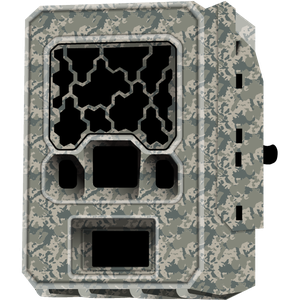
This is a method where cameras are placed out on Country and left to record any animals that move past the camera. The camera can be lured (usually with food like peanut butter, sardines or chicken) to encourage an animal to visit the camera. If a species is detected on camera, its presence is recorded. This method doesn’t focus only on Rabbits, as the presence of all species is usually recorded.
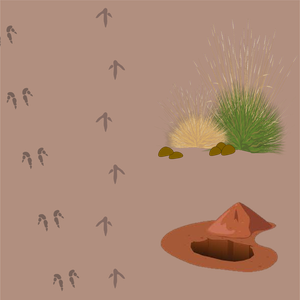
This is a method where trackers search a 2 Ha area for all signs of animals, including tracks, scats, diggings and other signs. If signs of a species are found in a plot, its presence is recorded. This method doesn’t focus only on Rabbits, as the presence of all species is recorded.
Primary sources
This landing page was developed using the following sources:
Primary sources
This landing page was developed using the following sources:
- Centre for Invasive Species Solutions (2011). FactSheet: Rabbit biology, ecology and distribution. https://pestsmart.org.au/toolkit-resource/rabbit-biology-ecology-and-distribution/
- Centre for Invasive Species Solutions (2012). Economic and environmental impacts of rabbits in Australia. https://pestsmart.org.au/toolkit-resource/economic-and-environmental-impacts-of-rabbits-in-australia
- Centre of Invasive Species Solutions (2024). Australia’s Rabbit Biocontrol Pipelines Strategy. Centre for Invasive Species Solutions, Canberra ACT. https://invasives.com.au/wp-content/uploads/2024/05/Australias-Rabbit-Biocontrol-Pipeline-Strategy.pdf
- Department of the Environment and Energy (2016). Threat abatement plan for competition and land degradation by rabbits. Commonwealth of Australia. https://www.dcceew.gov.au/environment/biodiversity/threatened/publications/tap/competition-and-land-degradation-rabbits-2016
Tools and resources
- Record Rabbit sightings and control activities on the RabbitScan app: https://www.feralscan.org.au/rabbitscan/
- Codes for humane capture, handling and destruction of feral animals in Australia: https://www.dcceew.gov.au/environment/invasive-species/publications/model-codes-practice-feral-animals
- Submit Rabbit liver samples for Calicivirus and Myxoma virus testing to CSIRO: https://research.csiro.au/rhdv/testing/