Monitoring Country

Foxes

Foxes are an invasive species that live in the bush as well as agricultural areas, towns and cities across most of Australia. They survive by scavenging and hunting other animals, including native mammals, birds, lizards and snakes, frogs, fish and insects.
Foxes are a threat to native species
Foxes are omnivores (eat plants and animals) and will scavenge and hunt for almost anything including small animals, eggs, insects and fruit.
Foxes are a serious threat to Australia’s wildlife, particularly to small-medium sized mammals like Possums, ground-nesting birds like Malleefowl, and reptiles like the Great Desert Skink and Marine Turtles. Predation by foxes is recognised as threat to over 80 threatened fauna species.
Foxes also compete for food resources with native predators like Quolls, Eagles and Goannas, and have diseases that can infect native animals, livestock and humans like sarcoptic mange and potentially rabies.
Foxes are listed as a declared pest in all Australian states and territories, and predation by Foxes is identified as one of the key threatening processes to native species under the Enivronmental Protection and Biodiversity Conservation Act. There is a national Threat Abatement Plan for predation by Foxes.
Managing Foxes
Total eradication of Foxes is not currently possible because of how widespread and well-adapted they are to Australia. Best practice management of Foxes therefore aims to reduce the threat of foxes to native animals. Control methods for Foxes include:
- Shooting
- Tracking with detector dogs
- Trapping using cage traps and soft-jaw leg-hold traps
- Den fumigation and ripping
- Feral predator-proof fenced areas
- Poison through bait, like Probait sausages which use 1080 poison, or Canid Pest Ejectors
Reducing the impact Foxes Is most effective when the control program is also combined with the control of other invasive animals like Rabbits, right-way fire management, and replanting or protection of native vegetation.
Where they live
Species Records
Use the + - Zoom controls to select an area
Foxes were introduced to Australia by early European colonisers. They quickly spread across Australia and are not found almost everywhere on the mainland, excluding tropical northern Australia, and various islands and fenced areas.
Habitat
Foxes have invaded all habitat types across Australia including woodlands, shrublands, wetlands, grasslands, alpine areas and deserts, and urban and agricultural areas. However, they may avoid areas with Dingo populations.
Where they sleep
Foxes are territorial and mark their home range with urine, scat and anal gland secretions. They are mostly nocturnal (active at night) and will spend the day hiding in dens, hollow logs, thick shrubs or other animal’s burrows.
What they look like
Foxes usually have reddish-brown fur with a white chin, chest and belly, and a bushy tail with a white tip. They range between 4 to 8 kg. They have strong claws for climbing and burrowing.
What they sound like
Foxes make lots of different types of calls, but you will commonly hear either contact or interaction calls between Foxes:
Contact calls: three to five syllable barking “wow wow wow”, usually heard between December to February. They can be confused with the calls of Tawny Owls.
Interaction calls: high pitched whining or shrieking.
You can monitor Foxes to better understand:
- Where Foxes are and aren’t on Country
- How many Foxes live on Country
- How well management of Country and Foxes is working
By using one or more the following methods, you can better understand Foxes on your Country. If you monitor the same place at the same time every year, you can see if there are changes to Foxes on Country.
If you are planning to implement a management plan for Foxes, a Before-After-Control-Impact (BACI) monitoring design can be used to look at whether your management is working well. This involves comparing measurement at an “impact” site, where the management is taking place, and at a “control” site, where the management isn’t taking place, both before and after the management (e.g. trapping, baiting, shooting) occurs.
2 Ha Plot: Tracks, Scats, Diggings & Signs Survey
A good way to monitor Foxes is by searching 2 ha areas for all signs of Foxes, including tracks and scats. The survey is used to find signs of lots of different animals, not just Foxes. This survey doesn’t need specialised equipment but it is useful to have some tracking skills.
What can you learn?
Presence/absence – if and where Foxes live on Country
Occupancy - If enough plots surveyed, the presence/absence data can be used to estimate occupancy. This type of modelling helps to work how many places really have Foxes, even if they weren’t detected at every plot. This can be used as an indicator of how large the population might be and if is getting smaller/bigger over time.
Activity - how many signs of Foxes were detected during the survey. This can be used as an indicator of how large the population might be.
Population size – if enough fresh scat can be collected and sent off for genetic analysis, the information can be used in a capture-recapture analysis to estimate how many Foxes live on Country.
Using it the Right-way
Fox tracks can be difficult to tell apart from Feral Cats, Feral Dogs and Dingoes.
You can learn more about the 2 Ha Plot method on the “How we check on things” page and in the Standard Operating Procedure 2 Ha Plot: Tracks, Scats, Diggings & Signs Survey
Remote Camera Survey
Remote cameras can be set up to take photos whenever an animal passes in front of the camera. This method is useful for Foxes because it means you don’t have to search for or catch them. This type of survey can be used to monitor lots of different animals or can be targeted just to Foxes.
You will need to buy good quality remote cameras, but not much training is needed for deploying cameras or identifying cats in the images. Images can also be processed first with the use of artificial intelligence (AI) tools, which can be useful when you have large numbers of images.
What can you learn?
Presence/absence – if and where Foxes live on Country
Occupancy - If enough cameras are deployed at different sites, the presence/absence data can be used to estimate occupancy. This type of modelling helps to work how many places really have Foxes, even if they weren’t detected on every camera. This can be used as an indicator of how large the population might be and if is getting smaller/bigger over time.
Activity - how many detections of Foxes during the survey. This can be used as an indicator of how large the population might be.
Using it the Right-way
Foxes use lots of different habitat types, so make sure the cameras are spread across all of the different major habitat types found on Country.
If the cameras are lured, use a meat or fish-based lure like tuna oil, tinned cat food or chicken necks. Make sure the lure is in the field of view of the camera.
Most camera surveys targeting Foxes have the cameras:
-
Along tracks, roads, trails created by animals or other linear features like dry river beds. You may not want to put cameras along publicly accessible roads to avoid cameras being stolen.
-
Facing towards the south and angled across the road/track trail (not at a right angle, often at a 23˚angle)
-
Aimed toward the middle of the road/track/trail (about 4.5cm away) from about 50 cm above the ground
-
Deployed for at least 30 days
-
At least 30 sites, spaced between 1 to 2 km apart
You can learn more about remote cameras on the “How we check on things” page and in the Standard Operating Procedure TITLE OF SOP
Spotlighting
Spotlighting surveys along transects can be used to monitor Foxes, particularly in flat and open habitats. They are particularly useful if repeated regularly over a long period of time. These surveys need only some simple equipment (head torches or spotlights) and a little bit of practice spotting and identifying animals at night.
What can you learn?
Presence/absence – if and where Foxes live on Country
Occupancy - If enough Foxes are detected at different sites, the presence/absence data can be used to estimate occupancy. This type of modelling helps to work how many places really have Foxes, even if they weren’t detected on every transect. This can be used as an indicator of how large the population might be and if is getting smaller/bigger over time.
Activity - how many detections of Foxes during the survey. This can be used as an indicator of how large the population might be.
Population size – if at least 60-80 Foxes are seen on transect, the information can be used in a distance-sampling analysis to estimate how many Foxes live on Country.
Using it the Right-way
Foxes use lots of different habitat types, so make sure the transects are spread across all of the different major habitat types found on Country.
This survey may not be useful in areas where Foxes are managed with shooting because they may have learnt to avoid cars and lights.
Foxes have very bright eyeshine with a yellow colour, but can easily be confused with Feral Cats, Feral Dogs and Dingoes.
You can learn more about spotlighting with line transects on the “How we check on things” page and in the Standard Operating Procedure Mammal Spotlighting Survey with Line Transects.
Any time you do work that might disturb or interfere with native animals and vegetation, particularly threatened species, you need to check with the state authorities to see if you need any approvals, such as scientific licences or animal ethics committee permits.
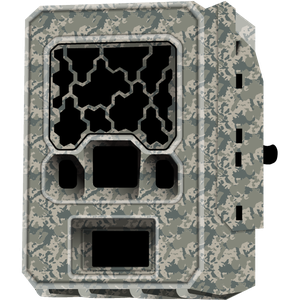
Camera traps can be used to capture photos of foxes.
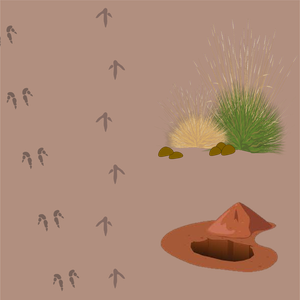
2 Ha Plot: Tracks, Scats, Diggings & Signs Survey
This is a method where trackers search a 2 hectare (Ha) area for all signs of animals, including tracks, scats, diggings and other signs. Signs can include:
· tracks
· fur or feathers
· …
Primary sources
This landing page was developed using the following sources:
Primary sources
This landing page was developing using the following sources:
Department of Sustainability, Environment, Water, Populations and Communities (2011). European red fox (Vulpes vulpes). Commonwealth of Australia: Canberra, ACT. https://www.dcceew.gov.au/environment/invasive-species/publications/factsheet-european-red-fox-vulpes-vulpes
PestSmart (2024). European foxes. https://pestsmart.org.au/toolkits/european-foxes/
Agriculture Victoria (2024). Integrated fox control. https://agriculture.vic.gov.au/biosecurity/pest-animals/invasive-animal-management/integrated-fox-control
Newsome, T.M., Greenville, A.C., Cirovic, D., Dickman, C.R., Johnson, C.N., Krofel, M., Letnic, M., Ripple, W.J., Ritchie, E.G., Stoyanov, S., Wirsing, A.J. (2017). Top predators constrain mesopredator distributions. Nature Communications 8(2017): 15469. DOI: https://www.nature.com/articles/ncomms15469
Dorph, A., Ballard, G., Legge, S., Algar, D., Basnett, G., Buckmaster, T., Dunlop, J., Edwards, A.M., Hine, A., Knight, A.R., Marshall, E., McColl-Gausden, S.C., Pauza, M.D., Penman, T.D. (2024). Current and emerging feral cat management practices in Australia. Wildlife Research 51(2024: WR23107. DOI: 10.1071/WR23107
Tools and resources
Record Fox sightings and activity on the FoxScan app: https://www.feralscan.org.au/foxscan/default.aspx
Codes for humane capture, handling and destruction of feral animals in Australia: https://www.dcceew.gov.au/environment/invasive-species/publications/model-codes-practice-feral-animals