Monitoring Country

Platypus

The Platypus is easily identifiable mammal with its duck-like bill and webbed feet. They spend most of their life in freshwater. Platypus belong to an animal family called Monotremes, which also includes Echidnas. Monotremes are the only mammals that lay eggs.
Conservation status:
- National – Not listed
- SA – Endangered, VIC - Vulnerable
The Platypus does not have a recovery plan because it is not listed as a nationally Threatened species. It is declining in abundance and distribution, especially in South Australia and Victoria.
Where Platypus live
Species Records
Use the + - Zoom controls to select an area
Platypus are found across eastern Australia from northern Queensland all the way south to Tasmania, but they have slowly been declining since European colonisation, particularly in South Australia and Victoria.
There is a small, introduced population on Kangaroo Island in South Australia.
Habitat
Platypus are found in freshwater habitats, particularly small rivers, creeks and streams. They prefer habitats with good water quality and native vegetation along the banks.
Where they sleep
Platypus build burrows in the banks of creeks, rivers or ponds. Young platypus will spend up to four months inside the burrow until they are ready to start swimming.
What Platypus look like
Platypus have a duck-shaped bill, webbed feet, a wide, flat tail and thick waterproof brown fur. Males have spurs on their back feet that produce venom during mating season.
What Platypus eat
Platypus are carnivores and eat other animals that live in the water like yabby, beetles, water bugs, worms and tadpoles. They catch their prey while swimming or by using their bills to forage through the riverbed.
Threats
Some of the key threats to the Platypus include:
- Unhealthy Country or lost habitat caused by:
- land-clearing for logging, farms and dams
- Poor water quality/water pollution
- Drought and water extraction/dams
- Climate change
REMEMBER! Any time you do work that might disturb or interfere with native animals and vegetation, particularly threatened species, you need to check with the state authorities to see if you need any approvals, such as licences or animal ethics committee permits. Click here for links to your state’s websites.
You can monitor Platypus to:
· Better understand where Platypus do and don’t live
· See how many Platypus live on Country
· Check how well management of Country and Platypus is working
Because Platypus are cryptic and spend lots of time underwater, so it can be difficult to monitor them.
Survey should usually be done immediately before or at the beginning of breeding season (spring) when Platypus are most active.
By using one or more the following methods, you can better understand Platypus on your Country. If you monitor the same place at the same time every year, you can see if there are changes to Platypus on Country.
Visual Searches
An easy way to monitor Platypus is with a visual search. This involves visiting suitable habitat, like the edge of a stream or pond, and looking for Platypus.
What can you learn?
Presence/absence – if and where Platypus live on Country
Using it the Right-way
Look for Platypus before or at the beginning of breeding season (spring) when Platypus are most active.
Look for Platypus in their preferred habitat: alongside freshwater creeks, rivers and streams with bush along the banks, flowing water and pools. Look for a spot where the water is calm so you can see any ripples.
When looking for Platypus, increase your chances of seeing them by staying as quiet and still as possible.
You can learn more about visual searches on the “How we check on things” page and in the Standard Operating Procedure Visual Searches for Platypus
Remote Cameras
Remote cameras can be set up to take photos whenever an animal passes in front of the camera. This method is useful for Platypus because they are cryptic species, meaning they can be difficult to see and catch.
What can you learn?
Presence/absence – if and where Platypus live on Country.
Occupancy - If enough cameras are deployed at different waterbodies, the presence/absence data can be used to estimate occupancy. This type of modelling helps to work how many places really have Platypus, even if they weren’t seen on every camera.
Using it the Right-way
Deploy cameras before or at the beginning of breeding season (spring) when Platypus are most active.
Deploy cameras beside their preferred habitat: alongside freshwater creeks, rivers and streams with bush along the banks, flowing water and pools. Make sure the cameras are high enough up that they won’t be flooded if the water level rises.
Remote cameras take photos when something moves, so avoid pointing cameras at moving water. Instead, aim them towards the soft banks of creeks, streams and rivers where Platypus are likely to burrow.
You can learn more about remote cameras on the “How we check on things” page and in the Standard Operating Procedure:
eDNA water monitoring
Environmental DNA (eDNA) water monitoring involves taking water samples from a waterbody and getting the sample analysed to see if a Platypus is or has recently been in a waterbody. This method is useful for Platypus because they are cryptic species, meaning they can be difficult to see and catch.
What can you learn?
Presence/absence – if and where Platypus live on Country
Using it the Right-way
Collect sample immediately before or at the beginning of breeding season (spring) when Platypus are most active.
Collect samples from their preferred habitat: freshwater creeks, rivers and streams with bush along the banks, flowing water and pools
You can learn more about the eDNA monitoring on the “How we check on things” page and in the Standard Operating Procedure eDNA Water Sampling with EnviroDNA Kit or no Kit
Any time you do work that might disturb or interfere with native animals and vegetation, particularly threatened species, you need to check with the state authorities to see if you need any approvals, such as scientific licences or animal ethics committee permits.
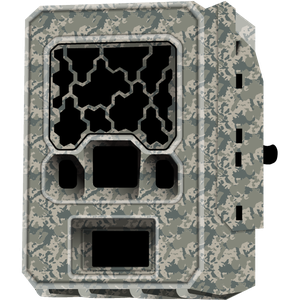
A good way to check for Platypus on Country is by using remote cameras. These cameras can be set up to take photos whenever an animal passes in front of the camera. Remote cameras can be deployed in Platypus habitat (along streams, creeks or ponds).
Using remote camera surveys, you can learn if and where Platypus live on Country. If you monitor the same places over many years, you can see if there are changes in where Platypus are on Country.
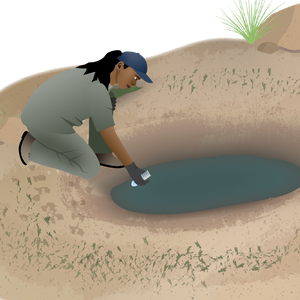
Animals leave genetic (DNA) traces of where they have been shedding their fur, skin, urine, faeces, sperm and eggs into the environment. This DNA can be found for a short time afterward using environmental DNA (eDNA) monitoring. This involves taking a water, soil or air sample and seeing if there …
Primary sources
This landing page was developing using the following sources:
Primary sources
This landing page was developing using the following sources:
· Woinarski J. & Burbidge A.A. (2016) Ornithorhynchus anatinus. The IUCN Red List of Threatened Species. https://dx.doi.org/10.2305/IUCN.UK.2016-1.RLTS.T40488A21964009.en.
· Hawke T., Bino G. & Kingsford R.T. (2019) A silent demise: Historical insight into population changes of the iconic platypus (Ornithorhynchus anatinus). Global Ecology and Conservation 20: e00720 https://doi.org/10.1016/j.gecco.2019.e00720
· WWF-Australia (2018). Platypus. https://wwf.org.au/what-we-do/species/platypus/
Tools and resources
· Record sightings or check for records of Platypus on Country using the platy-project website: platy-project.acf.org.au