Monitoring Country

Feral Pigs

Feral pigs are an invasive species that are related to domestic pigs. They are opportunistic omnivores that will eat animals, plants and fungi.
Feral Pigs are a threat to healthy Country and native species
Feral pigs have invaded many habitats, including forests, wetlands, and agricultural areas. Their behaviour can be destructive. Digging for food and wallowing causes soil disturbance and erosion, destruction of native vegetation, and degradation of water quality.


Figure 1 Examples of the damage feral pigs can cause to the environment. Credit: Peter Negus
Feral pigs compete with native species for food and habitat, predate on ground-nesting birds and reptiles, and spread invasive plants through seed dispersal. They also carry diseases that can threaten livestock and even human health.
Feral pigs are listed as a declared pest in all Australian states and territories. There is a national Threat Abatement Plan for predation, habitat degradation, competition and disease transmission by feral pigs (Sus scrofa).
Managing Feral Pigs
Control measures like trapping, hunting, and poison baits are used to reduce the impact of feral pigs. Sensitive areas can be protected with pig-proof fencing. However, effective management is extremely challenging thanks to their high reproductive rate, widespread distribution, and presence in remote areas.
Where Feral Pigs live
Species Records
Use the + - Zoom controls to select an area
Feral pigs live in habitts ranging from tropical rainforests and woodlands to semi-arid rangelands and wetlands. They occur throughout most of New South Wales and Queensland and significant areas of all other States and Territories, except South Australia and Tasmania.
Habitat
Feral pigs can live in many habitat types but occur in the highest numbers where there is plenty of water and dense vegetation, which provide both food and shelter. Pigs require daily water in hot conditions, so they are not often found in the arid areas like deserts.
What Feral Pigs look like
Feral pigs are a medium-sized mammal with a stout body and short legs. They vary in size, but are usually smaller than domestic pigs, with longer snouts and heavier forequarters. They have a coarse, bristly coat that can be black, brown, or brindled. Their robust skulls have a prominent snout that they use for digging up food, and adult males often have large tusks.
REMEMBER! Any time you do work that might disturb or interfere with native animals and vegetation, particularly threatened species, you need to check with the state authorities to see if you need any approvals, such as licences or animal ethics committee permits. Click here for links to your state’s websites.
You can monitor Feral Pigs to better understand:
- Where they are and aren’t on Country
- When and how often they are coming through areas
- How many live on Country, and check if numbers are going up or down
- Where to focus control of Feral Pigs to get the best results
- How well management of Country and Feral Pigs is working
By using one or more of the following methods, you can better understand Feral Pigs on your Country. If you monitor the same place at the same time every year, you can see if there are changes to Feral Pigs on Country.
Damage & Signs Count Method
Feral pig behaviours can damage habitat. This behaviour can leave signs including rooting, wallows, dung, footprints, travel pads, plant damage and tree rubs, which can be used to monitor the damage caused by feral pigs and/or as an indicator of feral pig activity. There are two ways you can collect and use feral pig signs: simple counts, or presence/absence.
Pig damage can be used as an indicator of feral pig impacts to water bodies and water courses. If you are worried about the damage that feral pigs are causing on your land, you can use damage and signs counts to keep an eye on how much damage is being caused. You may also use this method to track the effectiveness of your feral pig management, such as fencing or culling,
What can you learn?
- Presence or absence of feral pigs in an area.
- The amount of damage feral pigs is causing to waterbodies.
Using it the Right-way
- Avoid monitoring when strong winds and rain are forecast, as this weather can make signs of feral pigs difficult to see and identify.
- Use this method in areas where pigs occur or might occur and that are accessible on foot.
You can learn how to use track counts for monitoring Feral Pigs using the Standard Operating Procedure for Feral Pig Damage and Signs Count Monitoring.
Dung Counts Method
This method involves creating a number of small permanent plots, clearing the plots of any Feral Pig dung, and then going back to the plots again after a set amount of time and counting the amount of dung in the plots.
Dung counts is an easy method to determine the presence of feral pigs as it only requires surveyors to be able to identify pig dung from that of other species. Since it isn't necessary to see the pigs, and this method does not alter their behaviour, it is a reliable and easily repeatable monitoring method. A simpler version of this method is to only record the presence or absence of dung in each of the plots.
What can you learn?
- The presence or absence of feral pigs at a site.
- An index of the abundance of feral pigs at a site.
- Changes in the index of abundance over time.
Using it the Right-way
Use Dung Counts in areas where feral pigs occur that are easy to walk through, dung will be visible and where there is access to create long transects. This might include forest where vegetation is not too thick, through or adjacent to riparian (on the bank of a river or stream) vegetation. Avoid dense vegetation or difficult and inaccessible terrain.
You can learn more about Dung Counts in the Standard Operating Procedure: Feral Pig Monitoring - Dung Count.
Track Counts Method
This method involves setting up a series of track stations, using sand pads on vehicle tracks. The stations are raked or swept to create a smooth surface that will clearly show animal tracks. Over the following three mornings (at least) the stations are checked for animal tracks. All sets of feral pig tracks are counted.
Tracks are an easy method to determine the presence of feral pigs as it only requires surveyors to be able to identify pig tracks from that of other species. Since it isn't necessary to see the pigs, and this method does not alter their behaviour, it is a reliable and easily repeatable monitoring method.
What can you learn?
- The presence or absence of feral pigs at a site.
- An index of the abundance of feral pigs at a site.
- Changes in the index of abundance over time.
Using it the Right-way
- Use track counts where there is vehicle or walking tracks, or open areas you can use to create track stations around your area(s) of interest.
- Good places to monitor can include the area surrounding waterbodies that feral pigs will use under dry climatic conditions.
- Avoid using this method when the track(s) you plan to use for monitoring has high traffic and when heavy rain and strong wind are expected.
You can learn how to use track counts for monitoring Feral Pigs using the Standard Operating Procedure for Feral Pig Track Counts Monitoring.
Camera traps
Camera traps automatically take photos or videos when an animal moves past the camera. The camera can be lured to encourage an animal to visit the camera. If a species is detected on camera, its presence is recorded. This method also records the presence of all other species that pass in front of the camera.
What can you learn?
You can gather information to make your management actions more effective e.g. if camera trapping shows that a large group passes through a certain area at a particular time of day, you can target management actions in that area such as shooting, trapping or baiting.
- Where they occur:
-
- Occupancy - the proportion of sites occupied by a species.
- Changes over time – are species being detected at the same sites every year, or are they disappearing from some and/or appearing at other sites?
- Habitat preferences – does the species only occur in particular habitats?
- Detection frequency – how often are they being detected?
- Behaviour – what they are doing in the photos?
- Activity – when are they active and when do they pass through a particular area?
- You can see the pigs, making it possible to collect additional information, such as age, sex, group size and health (skinny or fat).
Using it the Right-way
Camera traps can be set up to specifically target Feral Pigs:
- Set cameras to record 24/7 as Feral Pigs can be active at all times of day.
- If there is an obvious path or area that pigs use, you can set up cameras to face this path. Face the camera down the path, so that you increase the amount of time the camera has to take pictures as pigs pass by.
- Pigs have a large body, so should easily trigger the camera sensors. You can use the standard camera trapping set up (height of 30 - 40 cm from ground) to monitor them.
- When deciding how far apart to place cameras, consider pig home range size. The average home range size of a pig in Australia is 9 km2 but this varies based on the habitat type, and the amount of food, water and shelter available.
- Avoid areas prone to flooding or becoming seasonally inaccessible, or make sure you bring in cameras before it becomes inaccessible.
You can learn how to use camera traps for monitoring Feral Pigs using the Standard Operating Procedure for Landscape Scale Camera Trap Monitoring Method SOP
Any time you do work that might disturb or interfere with native animals and vegetation, particularly threatened species, you need to check with the state authorities to see if you need any approvals, such as scientific licences or animal ethics committee permits.
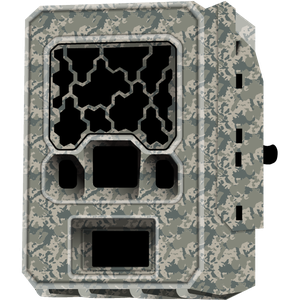
Camera traps are a general monitoring tool that can be used to monitor feral pigs and other species that live in the same area(s). They can be set to automatically take photos or videos when an animal passes through the camera's passive infrared sensor "detection zone."
Set up cameras for feral pigs:
- Pigs can be active at all times of day.
- If there is an obvious path or area that pigs use, you can set up cameras to face this path. Angle the camera down the path, so that you increase the amount of time the camera has to take pictures as pigs pass by.
- Pigs have a large body, so should easily trigger the camera sensors. You can use the standard camera trapping set up (height of 30 - 40 cm from ground) to monitor them.
- When deciding how far apart to place cameras, consider pig home range size. The average home range size of a pig in Australia is 9 km2 but this varies based on the habitat type, and the amount of food, water and shelter available.
Primary sources
This landing page was developed using the following sources:
Primary sources
This landing page was developed using the following sources:
· Mitchell, B., & Balogh, S. (2007). Monitoring techniques for vertebrate pests FERAL PIGS. https://pestsmart.org.au/wp-content/uploads/sites/3/2020/06/Monitoring-techniques-for-vertebrate-pests-pigs.pdf
· Perry, J., Waltham, N., Schafer, J., Marshall, J., Negus, P., Steward, A., Blessing, J., Clifford, S., Ronan, M., Glanville, K., Lyons, P., Vanderduys, E., Macdonald, S., Hoskins, A., Robinson, C., Nordberg, E., & Wilson, S. (2021). Defining metrics of success for feral animal management in northern Australia. CSIRO. https://nesplandscapes.edu.au/wp-content/uploads/2022/07/NESP-NAER-Hub-final-report.pdf
· Threat Abatement Plan for predation, habitat degradation, competition and disease transmission by feral pigs (Sus scrofa). (2017). https://www.dcceew.gov.au/sites/default/files/documents/tap-feral-pigs-2017.pdf
· Glanville, K., Perry, J., Ryan, T., Ronan, M., & Zivec, P. (2023). Applying a versatile, comprehensive, attribute-based waterhole classification scheme to ecosystem-based management challenges. Wildlife Research, 50(12), 1085–1096. https://doi.org/10.1071/WR22027
· Koichi, K., Haliday, D., & Harris, C. (Eds.). (2020). Glovebox Guide for Managing Feral Pigs v2.0. PestSmart Toolkit publication. The Centre for Invasive Species Solutions. https://pestsmart.org.au/wp-content/uploads/sites/3/2020/09/CISS-Glovebox-Guide-Pig-web.pdf
· Marshall, J. C., Blessing, J. J., Clifford, S. E., Negus, P. M., & Steward, A. L. (2020). Epigeic invertebrates of pig-damaged, exposed wetland sediments are rooted: An ecological response to feral pigs (Sus scrofa). Aquatic Conservation: Marine and Freshwater Ecosystems, 30(12), 2207–2220. https://doi.org/10.1002/aqc.3468
· Negus, P. M., Marshall, J. C., Clifford, S. E., Blessing, J. J., & Steward, A. L. (2019). No sitting on the fence: protecting wetlands from feral pig damage by exclusion fences requires effective fence maintenance. Wetlands Ecology and Management, 27(4), 581–585. https://doi.org/10.1007/s11273-019-09670-7
· Perry, J., Waltham, N., Schafer, J., Marshall, J., Negus, P., Steward, A., Blessing, J., Clifford, S., Ronan, M., Glanville, K., Lyons, P., Vanderduys, E., Macdonald, S., Hoskins, A., Robinson, C., Nordberg, E., & Wilson, S. (2021). Defining metrics of success for feral animal management in northern Australia. CSIRO. https://nesplandscapes.edu.au/wp-content/uploads/2022/07/NESP-NAER-Hub-final-report.pdf
· Waltham, N. J., & Schaffer, J. (2021). Will fencing floodplain and riverine wetlands from feral pig damage conserve fish community values? Ecology and Evolution, 11(20), 13780–13792. https://doi.org/10.1002/ece3.8054