Monitoring Country

Photo Point Monitoring
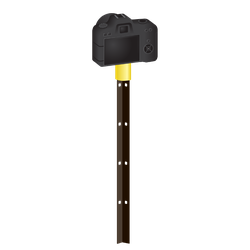
Photo point monitoring is a simple and cost-effective way to track changes to an area. Photos are taken from the same location and angle to make sure changes observed are from environmental changes and not differences in perspective.
By taking photos of the same spot over time, a clear visual record is created. Land managers can visually assess changes in vegetation and disturbances by comparing photos sequentially.
Remember that a photo is a snapshot – it captures what an area looked like at a point in time.
Why is Photo Point Monitoring useful?
Photo point monitoring is a visual tool – it can tell a good yarn, it can help to explain what is happening out on Country to those who can’t get out there and see it for themselves.
Great for telling a good news story: May show recovery of country after good management or after right-way fire.
Powerful in telling a bad story: May show decline in health of trees, damage caused to a wetland by feral pigs.
Helpful with funding: Either attracting new funding or reporting on existing funding.
Relatively quick and easy: Some methods require minimal training. Usually only has a small impact on the site you are monitoring.
What can Photo Point Monitoring monitor?
Photo point monitoring is most commonly used to tell us about changes in vegetation structure or health. There are two monitoring methods, one is a simple version and the other is the TERN Ausplot method.
Simple Photo Point Monitoring
This is a simple, cost-effective way to track changes using a tablet, mobile phone, or basic camera.
What can you learn?
Visual Change/Trend - You can track general changes in vegetation structure or health over time.
Health Check - It is a simple and quick way to check if an otherwise healthy area is not becoming unhealthy.
Restoration Success - It can capture how successful your restoration efforts are, like revegetation, erosion control, or weed control.
Post-Event Recovery/Damage - It shows recovery or damage after big disturbances like fires or floods.
What can’t you learn?
Quantitative Change - This method is qualitative. This means you can’t analyse the data to measure things like the size of the change that has occurred between photos taken.
Species Richness/Composition - It won't give you a precise count of the total number of different plant species (species richness) or detailed species composition (what plants are there), as the photo is a snapshot of one point.
Using Photo Point Monitoring the Right-way
REMEMBER! Any time you do work that might disturb or interfere with native animals and vegetation, particularly threatened species, you need to check with the state authorities to see if you need any approvals, such as scientific licences or animal ethics committee permits.
The two key elements to take care with when photo point monitoring are:
- Being careful to take the photos from the same spot, at the same angle with the same field of view each time.
- Keeping track of the images when you return from the field – labelling and storage on the computer are important things to get right.
Think carefully about how often to retake the photos. It will depend on the reason for monitoring, for example:
- If you want to track rapid change after an event like a fire, take photos more often
- If you want to show if weed control is working, take photos before and after weed removal
- If you want to just keep an eye on a bit of healthy Country, take photos only every year or two
- If you want to show changes in Country over time, take photos every season or between wet and dry times.
You can learn more about using Photo Point Monitoring in the Photo Point Monitoring Environmental Monitoring Method.
Primary sources
This landing page was developed using the following sources:
Primary sources
This landing page was developing using the following sources:
Tools and resources
There are lots of method documents available on the internet. Each have slight differences in how they recommend you take the photos. Here are some of them:
TERN have a more advanced method within the AusPlots Rangelands Survey Protocols Manual. This can be included in TERN databases and makes more complicated analyses of your images possible. With the use of suitable algorithms, images can also be processed to provide 3D reconstructions of each plot which can be used to monitor change over time to track plot condition as well as providing a unique, fast measurement of basal area and biomass.
NSW National Parks and Wildlife: Photographic monitoring factsheet (PDF - 408KB) (nsw.gov.au)
NSW Environment Trust: Ecological Monitoring Guide (nsw.gov.au)
SA Eyre Peninsula Landscape Board: eplb_photopoint_monitoring_factsheet.pdf (environment.sa.gov.au)
WA NRM Program: SNRMP_FactSheet_Photopoint_Monitoring_revised_05.11.2021.pdf (www.wa.gov.au)
QLD Healthy Land and Water: file (hlw.org.au)
WA Wildlife Notes: 080346-09.pdf (dbca.wa.gov.au)
Rivers of Carbon: Photo monitoring your restoration project – a guide for landholders – Rivers of Carbon
Tools and resources
- file_save Photo Point Monitoring